
 By
By 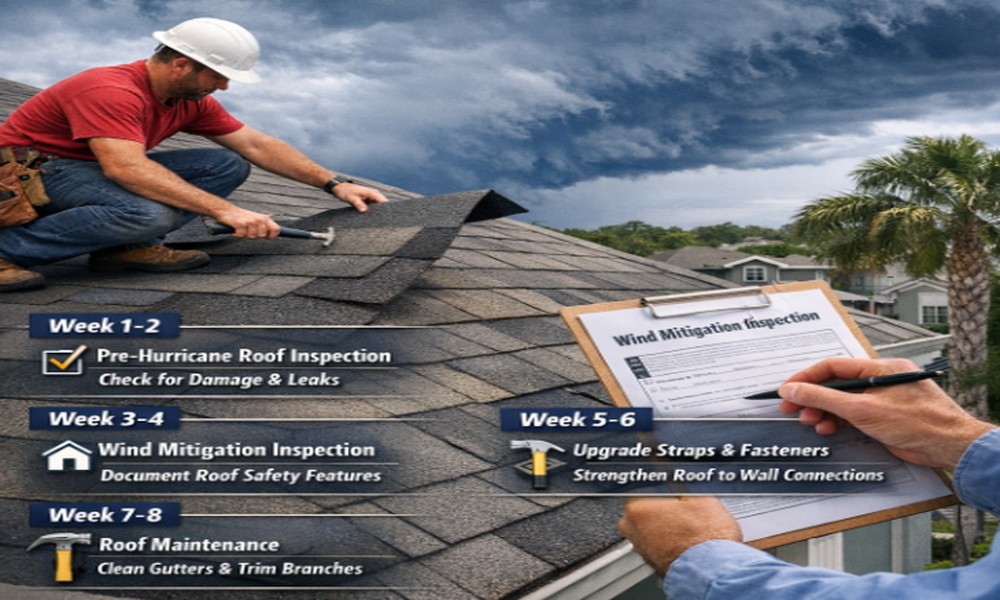
I often tell homeowners to do the same. Don’t wait until a storm appears in the forecast to think regarding your roofing. At that point, the stores are cleaned out, contractors are booked quickly, and even small roof problems suddenly seem more significant. This article is about hurricane Readiness the right way, beginning early and moving up through week starting from March until June 1 when the Atlantic season officially starts. NOAA states that the Atlantic season starts from June 1 until November 30, which means the aim is to utilize spring to be prepared for the rigors.
In the case of Baypoint Roofing, I think the most effective roof designs are the ones that are simple. Examine what you’ve got. Make sure you fix the weak areas. Make sure that the paperwork is put in order. Check it over again before the summer season begins. This is what is the feeling of Hurricane Readiness ought to be like. Not panic. It’s a simple plan that will strengthen your home in the event of severe weather.
Another reason to begin earlier is to protect yourself from insurance. In Florida the wind mitigation inspection could help record features such as roof decks, roof coverings, attachment as well as roof-to-wall connections shutters, as well as additional water-resistant features. The inspection is conducted using to complete the Uniform Mitigation Verification Inspection Form and the results are sent to the insurance company for potential discount or credit. These discounts may differ according to insurer as well as the amenities your house actually includes, which is why I generally advise my clients not to make assumptions about. Document it.
Key Takeaways
- Hurricane Readiness is best when it is started in March, not the time the first storm hits.
- A roof inspection prior to hurricanes could uncover loose shingles, weak flashing, gutters that are clogged and minor leaks before they turn into storm-related damage.
- A wind mitigation audit could assist in documenting the features that are eligible to receive wind mitigation credits in Florida.
- Fasteners for roof straps and roof straps, as well as stronger connections between walls and roofs are important in wind resistance.
- A basic roof hurricane preparedness checklist helps prevent the process from being overwhelming.
- Some roofing improvements that are storm-ready should be completed early as permits material, scheduling, and permits will take time.
- If your roof has wear or deterioration in the late spring, waiting until May could make it difficult to choose the best alternatives.
Why Start Your Hurricane Readiness Plan In March?
March is the time when Hurricane Readiness should begin because you have plenty of time to examine the area, make comparisons, schedule and make repairs. When spring arrives in late spring the roofers, inspectors and insurance-related companies start becoming more busy. However, that doesn’t mean there isn’t anything else that isn’t possible to do however. It’s just getting harder and often more urgent. I’ve seen homeowners put off their plans until there’s a naming hurricane in the Gulf before they decide to act. By then, they’re trying to resolve problems in the spring, and then go into summer anxiety mode. This isn’t ideal.
If you are in Florida Preparing early allows you to manage the paperwork aspect. According to the Florida Department of Financial Services states that discounts or credits for wind mitigation need to be inspected by a licensed inspector. The completed form is sent to the insurance company for a examination. This process is simpler in the absence of racing the calendar.
Week 1 And Week 2: What Should Happen During A Pre Hurricane Roof Inspection?
The initial two weeks are focused on taking a look, not making assumptions. This is the perfect time to conduct an actual pre-hurricane roof inspection. Take a walk around through the home from the ground first. Check for missing shingles, elevated edges and gutters with sagging broken flashings, cracks in sealant loose soffits, and tree branches that are too close to the roofline. I consider this to be an extremely beneficial aspects in Hurricane Readiness because it provides you with an easy starting point. It lets you stop worrying about the general and begin to focus on specific aspects.
You should then call in a professional roofing professional if you see anything that appears suspicious. Most storm damage begins with tiny things that were already there. Perhaps a shingle was loosened. Perhaps the flashing around an opening was beginning to fail. Perhaps the gutter was backing in water that was leaking over the edge. These are common issues until they become a problem. It is recommended that the National Weather Service recommends preparing every year, and strengthening weak spots within the home prior to storms are likely.
At this point I also recommend homeowners to collect roof documents. Check your permit history, in case you have it. Also and photos of previous repairs, warranty documents as well as any previous inspection reports. This can be helpful later when you plan to schedule an inspection for wind mitigation or speak with your insurance company about credits for wind mitigation.
Week 3 And Week 4: What Does A Wind Mitigation Inspection Look For?
Weeks 3 and 4 are the time when the Hurricane Readiness is a little more technical. This is the best moment to schedule an inspection to mitigate wind even if you’ve not previously had one or the roof has been upgraded since the last inspection. In Florida certified inspectors are licensed engineers, contractors architects, architects, or certified inspectors of building codes. They take note of the key features that are wind-resistant and then submit their findings to Florida’s mitigation verification form.
What are they searching for? The most common features are the type of roof covering roof deck attachment connections from the roof to the wall roof shape opening protection, and additional water-resistant. This Florida consumer guide explains that the features that qualify could include code-compliant roof covers as well as specific nail sizes and spacing for roof deck attachment and connections such as clips, single wraps as well as double straps.
It is also the time when homeowners are taught something that is important. Wind mitigation credits aren’t one-time discounts. They differ based on the features in place and, in reality, by the insurer. The Florida guidelines say that your insurance agent will be able to tell you how much discount you could get if certain features were added or upgraded. Therefore, hurricane Readiness here isn’t just physical. It’s financial too.
Week 5 And Week 6: Why Do Roof Straps And Fasteners Matter So Much?
In the weeks between five and six The Hurricane Readiness process is less about identifying problems and more about repairing weak points. This is when roofing straps, as well as the fasteners are brought into the mix. The homeowners who hear these words occasionally glaze over at times, which I can know. They sound tiny. However, in wind-related events tiny connection points are important very much. The roof does not just require a good roof shingle. It also requires strong attachment beneath and strong connections where the roof structure is joined to the walls.
The Florida wind mitigation materials specify roof-to-wall connections such as clippings, wraps that are single in addition to double straps. options that be eligible for mitigation discounts. The guide also hints at roof deck attachments that use specific nails and spacings that are compliant with the code. In simple English this means that the manner in which your roof is attached and fastened is crucial in terms of performance, and, possibly, to protect yourself.
This doesn’t mean all homes require a total roof reconstruction just to increase the ability to withstand hurricanes. Sometimes, the greatest value comes by knowing the features you have. In other instances, particularly when a re-roof is planned, it is sensible to determine if better connections or an upgraded fastening system can be accomplished simultaneously. The 2025 update to Florida’s property insurance stipulates that improvements to the roof-to-wall connection made provided by roofers who are licensed and certified by the state of Florida, is linked to the replacement of roof coverings or repair, and must be installed and inspected in accordance with specific standards.
Week 7 And Week 8: How To Prepare Roof For Hurricane Season With Basic Maintenance
The weeks seven and eight are when hurricane Readiness is still easy This is a good thing. The maintenance part is. There is no need for an immense project for this section. You will require coherence.
Here’s a useful list of tips for maintaining your hurricane roof to follow:
- Make sure that the gutters are clear and drains are free, so that water drains off the roof without issue.
- Take away roof debris, particularly leaves, branches and any other material that may keep moisture in.
- Remove limbs hanging overhanging from the roof that could cause damage or even fall onto the roof in strong winds.
- Examine soffits, fascias flashing, sealing points.
- Check out vents and skylight edges. Also, look at boots, vents and chimney flashing for holes or lifting.
- Check that any yard equipment or ladders and other outdoor items aren’t stored in areas where winds can transform them into a mess.
There are homeowners who would prefer not to do this as it seems too basic. However, the best way to prepare the roof for hurricane season typically is a matter of maintenance, not major building. Drainage obstructions and leaks might not sound like a big deal however they can cause water damage quickly after heavy rains hit.
Week 9 And Week 10: Which Storm Ready Roofing Upgrades Are Worth Considering?
The weeks 9 and 10 are for the more important hurricane Readiness decision making. If your inspection revealed weak points, this is when you determine what’s worth upgrading prior to June 1st. There is no need for every home to have everything. It is my opinion that this is crucial to mention. Sometimes, the most effective option is a specific repair. Sometimes, it’s an improvement due to the age of the roof or condition has already pointed in that direction.
Some storm-ready roofing enhancements that homeowners typically inquire about are:
- replacing damaged or old roofing materials with ones that are designed for higher winds
- Enhancing the roof deck’s attachment the process of re-roofing
- The roof to wall connection can be improved
- by confirming or adding secondary resistance to water
- reinforcing vulnerable flashing details
- the repair of roof edges that are weak, if allowed by the code and scope
There’s also an insurance aspect in this. Florida’s consumer guide suggests that houses built in later editions of the code may be automatically qualified to receive a discount of a minimum amount on the windstorm component of the insurance premium due to a the stronger roof covering as well as roof attachments and the roof-to-wall connection requirement as well as the fact that further features could increase discounts even more. It also states that the discount amount varies based on the features as well as the insurer’s assessment. Therefore, if you’re thinking about roofing work and are considering it, you should ask what the implications of those improvements are for credits for wind mitigation.
Week 11 And Week 12: What Should Be On A Roof Hurricane Preparedness Checklist?
Between weeks 11 and 12 The Hurricane Readiness program should begin becoming more well-organized. It is at this point that I encourage homeowners to go through the basic hurricane preparedness checklist. It’s not fancy. It’s just a few steps.
Your checklist should contain:
- inspection complete
- Repair list completed or scheduled
- gutters cleaned
- overhanging limbs trimmed
- images of the roof captured and stored
- Insurance policy review
- request a form for wind mitigation inspection or provided if applicable
- Contact information for contractors saved
- Emergency tarp plans in place
- objects that can be found in the open to be secured quickly
The image is more important than what people think. Make sure you take wide shots as well as close-ups. Store them somewhere that you can easily locate. If a storm ever occurs photographs taken before the storm can assist in proving the condition of the property and facilitate conversations with contractors or adjusters. It’s not just a Florida-only thing. It’s just a smart homeowner behavior. Yes, I’d consider it to be part of the Hurricane Readiness as well.
Final 2 Weeks Before June 1: What Should You Do Right Before Hurricane Season Starts?
The final phase In the final stretch, Hurricane Readiness is about confirming. Make sure you check the repair. Verify that all paperwork is in the place it’s supposed to be. Check to see if the roofing company’s contact number is listed on your phone. Go back to the house following a severe rain if you can, but only to check if something obvious has had changed.
This is also the best time to purchase or stage the items you might require later, such as tarps and approved window protection materials prior to the market getting restricted. It is recommended that you purchase the National Weather Service notes that now is the best time to buy the materials you need for boarding up windows in preparation for the approaching storm, and not at the last minute.
Another aspect. If a storm actually is imminent, the focus shifts from long-term improvements to short-term preventive measures. It is recommended that Weather Service says that when the threat of a storm is imminent homeowners must secure their windows, secure objects outside, lock doors outside and follow evacuation instructions when local officials issue the instructions. This is different from the spring preparation stage but it’s a component of the overall picture.
Why Wind Mitigation Credits Are Worth Asking About
Most homeowners are focused solely on preventing damage that is understandable. That’s the purpose. But the credit side is also worth a look. In Florida the insurance industry is required to provide discounts for specific upgrades that will make homes more resistant to damage caused by storms as well as aspects connected to the roof or its connections. The savings actually vary however the potential savings are sufficient to me to believe it should be included in any hurricane Readiness strategy.
At Baypoint Roofing I typically say to people: if you already spend money on roofing work be sure to ask additional questions. Find out if the work has an impact on the results of wind mitigation inspections. Check if your current roof documents are sufficient. Find out if the insurance company requires new documents. Simple administrative tasks can aid in savings over the long term. There aren’t always huge savings however, it is worth a look.
Final Thoughts
The most effective type of hurricane Readiness is the one that is boring at the close. This is an excellent way. In the last week of May, you’ll want to have your roof checked, weak spots addressed and the tree’s limbs cut and the paperwork backed up and you’ll be asked questions about credit. You don’t want to be fumbling around, looking or speculating.
This is the purpose of a 90-day roof schedule. It distributes the work. It allows you to think. It also lets you make better decisions prior to the storm season pressures kick into. Baypoint Roofing Baypoint Roofing, we have observed how calmer the homeowners’ experience is when they begin their project in March and progress through the steps. It’s not extravagant. It’s simply clever. That, for me, is what true Hurricane Readiness is like.
FAQs
What’s the distinction between roofing inspection and wind mitigation inspection?
A routine roof inspection looks at wear, condition damages, leaks and repair requirements. A wind mitigation inspection identifies particular storm-proof features like the type of roof covering roof deck attachments and roof-to-wall connections roof shapes and opening security, using the mitigation form of Florida for insurance reviews.
Are roof fasteners and straps impact the discounts on insurance?
They may. The mitigation guide for Florida states that the qualifying features could include roof deck attachment methods as well as connections such as clips, single wraps or double straps. Insurers will then go over the features that are documented to determine whether they qualify for discount or credit.
When should I book an inspection of my roof prior to hurricane season?
March or early spring is a good time to do this because it allows you the opportunity to examine repair, inspect, and record prior to June 1, the day it is when the Atlantic storm season begins.
Are there credits for wind mitigation without having a new roof?
Sometimes, yes. Credits will depend on the features your house already has, and also what was included in the inspection report. A more recent roof could aid, however other aspects such as roof shape and shape, roof-to-wall connections, shutters, and the secondary water resistance may also play a role.
Are there any helpful roofing maintenance tips for hurricanes?
Begin by clearing gutters, clear branches with overhanging branches examine flashings and penetrations, and repair roof materials that are damaged or loose prior to the start of the start of storm season. These are straightforward steps, but they can help to avoid problems that could be avoided.
How can you prepare your roof if the storm is already approaching?
In the meantime, concentrate on the short-term safety steps and not on major changes. The official guidance advises you to seal open spaces and secure loose outdoor items as well as secure the exterior doors. be aware of reliable forecasts and follow evacuation instructions if they are issued.
Do wind mitigation credit amounts similar to every insurance company?
No. The consumer guidelines for Florida state that discounts differ based on elements that make up the house, and your insurance agent or company will inform you of the discount that could be applicable.
This post was written by a professional at Baypoint Roofing. Baypoint Roofing is a State-certified, insured, bonded, and licensed roofing contractor specializing in insurance restoration, storm damage repair, and expert Roof inspection Land O Lakes FL and installations. With over 25 years of experience, we proudly serve the entire state of Florida. Whether you need a complete roof replacement or precise repairs, our skilled team delivers unmatched quality and service. Trust Baypoint Roofing to protect your home or business with solutions that endure the Florida elements and exceed your expectations. Your satisfaction is our top priority.





Comments